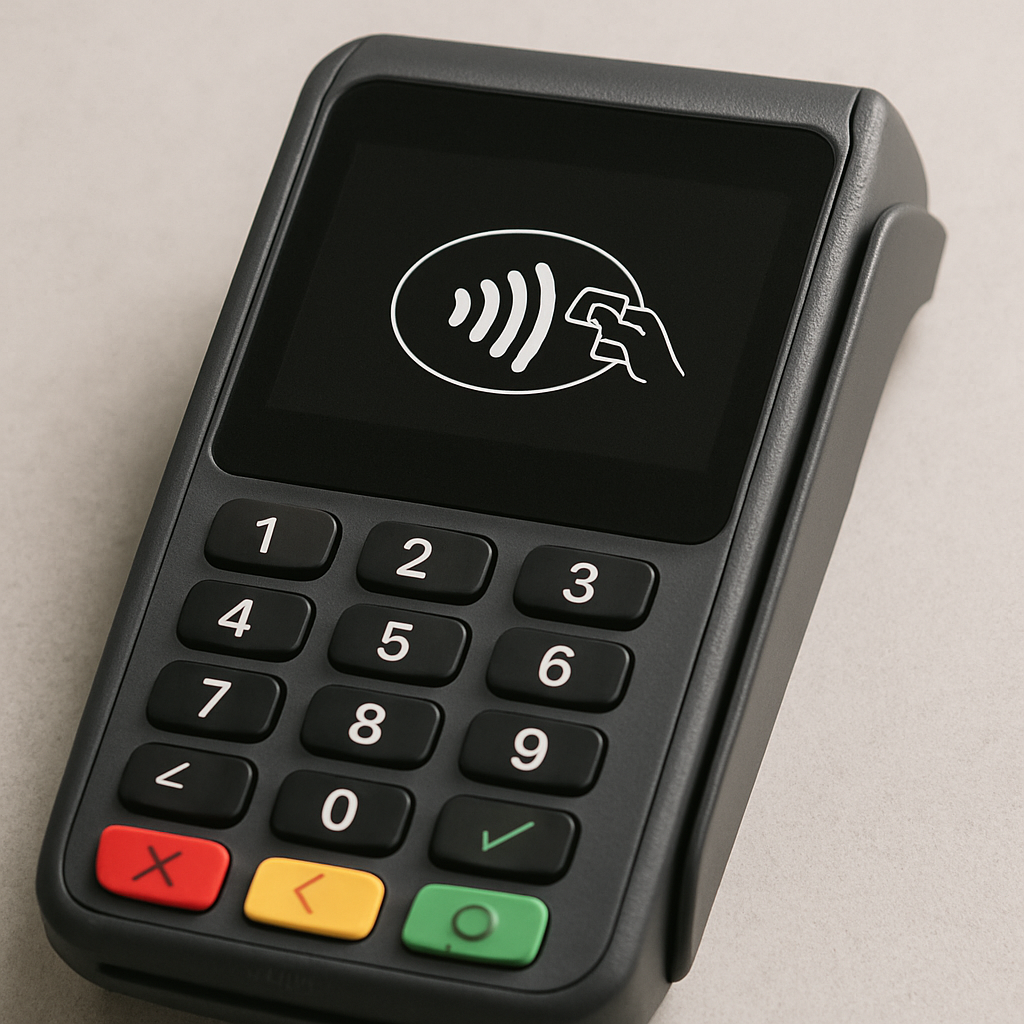








Credit card processing fees can take a noticeable portion of a small business’s revenue. A merchant may pay processing costs on hundreds or thousands of card transactions every month, and even relatively small fees can add up to a significant annual expense.
Take cards with Tap Simple. Readers and terminals for every setup, one Payments Hub dashboard and a cash discount program built to protect your margins.
Apply nowSee pricingThat is why more business owners are comparing cash discount vs surcharge programs as alternatives to simply absorbing every credit card processing fee themselves.
At first glance, cash discount vs surcharge may sound like two different names for essentially the same thing. In both cases, customers paying with cards may ultimately pay more than customers paying with cash.
But the structure matters.
A cash discount generally starts with a posted card or standard price and offers customers a lower price when they pay using cash or another eligible payment method. A surcharge, by contrast, generally adds an additional charge to the advertised price when a customer chooses an eligible credit card.
That distinction can affect:
- Pricing
- Signage
- Receipts
- Customer perception
- Point-of-sale configuration
- Card-network requirements
- Applicable state laws
- Debit-card treatment
- Compliance
Understanding cash discount vs surcharge is therefore important before implementing either program.
The right approach depends on your business, customer base, payment volume, average transaction size, POS technology, and local requirements.
This guide explains cash discount vs surcharge, how each approach works, the advantages and disadvantages, and what small businesses should consider before changing their payment pricing model.
What Is a Cash Discount?
To properly compare cash discount vs surcharge, start with the cash discount side.
A cash discount rewards customers who choose an eligible cash payment method by reducing the amount they pay from the standard posted price.
Imagine an item has a standard price of:
$103
A qualifying customer paying cash could receive a discount and pay:
$100
The customer paying by card would continue paying the posted $103 price.
This is conceptually different from advertising the product at $100 and then adding $3 when the customer presents a card.
That distinction is at the center of cash discount vs surcharge.
Visa’s published guidance describes a cash discount as a discount offered to customers using another payment method and says merchants implementing one should display either the card price or both cash and card prices appropriately.
For businesses considering a cash discount program, correct implementation is essential.
What Is a Credit Card Surcharge?
The other side of cash discount vs surcharge is the credit card surcharge.
A surcharge is an additional amount assessed when a customer chooses to pay using an eligible credit card.
For example:
Advertised purchase price:
$100
Eligible credit-card surcharge:
$3
Final credit-card transaction:
$103
The business is therefore adding an amount to the underlying purchase price rather than reducing a standard price for customers who pay with cash.
That structural difference is what makes cash discount vs surcharge more than simply a terminology issue.
Card networks impose rules governing surcharging, and state or local laws can add additional requirements or restrictions.
Visa’s current U.S. guidance states that credit-card surcharging is allowed in most states but merchants must comply with applicable requirements and card-network rules. Visa also requires U.S. merchants to notify their acquirer before beginning to surcharge.
Because requirements can change, merchants should confirm their current obligations with their processor or acquirer before launching a surcharge program.
Cash Discount vs Surcharge: The Basic Difference
Here is the simplest way to understand cash discount vs surcharge:
| Cash Discount | Surcharge |
|---|---|
| Starts with a standard/card price | Starts with an advertised base price |
| Eligible cash customers receive a discount | Eligible credit-card customers pay an added charge |
| Lower price is offered for cash | Additional amount is added for eligible credit cards |
| Can reduce merchant processing burden | Can offset eligible credit-card costs |
| Must be correctly disclosed | Subject to specific network and legal requirements |
The end result may sometimes look similar to a customer.
One person pays $100.
Another pays $103.
But in a cash discount vs surcharge comparison, how those two prices are established and disclosed is important.
This is why businesses should not simply install a POS setting that says “3% fee” and assume everything is compliant.
Why Businesses Compare Cash Discount vs Surcharge
The primary reason merchants evaluate cash discount vs surcharge is simple:
credit card processing costs money.
Every time customers pay with cards, merchants can incur costs such as:
- Interchange
- Network fees
- Processor markup
- Per-transaction fees
- Gateway costs
- Monthly fees
For a business processing $100,000 each month, even a small effective processing rate can translate into thousands of dollars of monthly expense.
Consider a hypothetical business paying an effective processing cost of 3%.
On $100,000 in monthly card volume, that represents approximately:
$3,000 per month
or:
$36,000 per year
That creates a powerful incentive to evaluate cash discount vs surcharge rather than automatically treating processing fees as unavoidable overhead.
Before comparing these pricing models, it helps to understand exactly what your business is paying. Our guide to credit card processing fees for small business explains interchange, processor markup, transaction fees, effective rates, equipment costs, and other expenses that may appear on a merchant statement.
Cash Discount vs Surcharge Example
A practical example makes cash discount vs surcharge easier to understand.
Imagine a restaurant wants to receive approximately $50 for a meal before considering payment-processing costs.
Cash Discount Example
The restaurant posts a standard/card price of:
$51.50
The business offers an eligible cash discount of:
$1.50
Cash customer pays:
$50.00
Card customer pays the standard posted price:
$51.50
Surcharge Example
The restaurant posts the meal at:
$50.00
An eligible customer chooses to pay by credit card.
An applicable surcharge is added.
The final card total becomes higher than $50.
In both examples, card-paying customers can ultimately spend more than cash-paying customers.
But the pricing mechanics are different.
That is the fundamental cash discount vs surcharge distinction.
Cash Discount vs Surcharge: Which Is Better for Reducing Fees?
From the merchant’s perspective, both approaches can potentially reduce the amount of card-processing expense the business absorbs.
But when comparing cash discount vs surcharge, the result depends heavily on implementation.
A properly structured cash discount program may allow a business to incorporate card-related costs into its standard pricing and reward eligible cash customers with a lower price.
A surcharge program may instead allow a business to add an eligible fee when certain credit cards are used.
The better cash discount vs surcharge option depends on factors such as:
- Percentage of customers paying cash
- Percentage paying credit
- Debit-card usage
- Average ticket
- Business type
- Customer sensitivity to fees
- POS capabilities
- Local laws
- Card-network requirements
This is why the answer to cash discount vs surcharge is not identical for every merchant.

Cash Discount vs Surcharge and Debit Cards
Debit cards are an especially important consideration in any cash discount vs surcharge strategy.
Merchants should not assume that a surcharge program can simply apply to every card presented at checkout.
Card-network rules distinguish among transaction and card types.
For example, Visa’s published surcharge materials specifically address credit-card surcharging, and merchants should ensure their system correctly identifies eligible transactions.
That means your POS and payment processor need to be configured correctly.
A simplistic approach such as adding the same percentage to every card transaction can create problems.
When evaluating cash discount vs surcharge, ask your processor specifically:
- How are credit and debit transactions identified?
- Which transactions are eligible?
- How does the POS apply the pricing?
- How is the amount shown on receipts?
- What happens with contactless debit?
- What disclosures are required?
The technical setup is part of compliance.
Cash Discount vs Surcharge: Customer Perception
The customer experience is one of the biggest differences businesses should consider when comparing cash discount vs surcharge.
Customers generally prefer transparent pricing.
Nobody likes reaching the final step of checkout and discovering an unexpected charge.
A cash discount can sometimes be framed positively:
Pay the standard price by card or save by paying cash.
A surcharge communicates something different:
Pay the listed price, but pay an additional amount if you use an eligible credit card.
Those two experiences may feel different even when the final dollar amounts are similar.
That makes customer psychology an important part of cash discount vs surcharge.
Advantages of a Cash Discount Program
There are several potential advantages on the cash discount side of cash discount vs surcharge.
Reduced Processing Expense
The most obvious advantage is financial.
A correctly structured program can potentially reduce the amount of payment-processing expense the merchant absorbs.
For businesses with substantial card volume, the annual savings can be meaningful.
Encourages Cash Payments
Customers have a financial reason to choose cash.
More cash transactions can mean fewer card-processing costs for the business.
Positive Customer Framing
“Cash discount” can feel more positive than “credit-card fee.”
The customer is being offered a discount rather than being told that something extra is being added.
Predictable Pricing Structure
When correctly configured, the standard price already incorporates the card-paying customer’s amount.
For some merchants, that can make the cash discount vs surcharge decision easier from a customer-experience perspective.
Potential Drawbacks of a Cash Discount Program
A cash discount model is not automatically perfect.
When comparing cash discount vs surcharge, consider these drawbacks.
Pricing Must Be Displayed Properly
The business must ensure customers can understand the prices before payment.
Confusing signage or incorrectly configured menus can create frustration.
POS Configuration Matters
The POS needs to correctly calculate and display the program.
Improvised implementations can cause problems.
Customer Education May Be Necessary
Employees should know how to explain the pricing structure clearly.
Not Every Business Has Many Cash Customers
A largely online business may receive almost no cash payments.
The practical value of a cash discount may therefore differ considerably between merchants.
Advantages of Credit Card Surcharging
There are also potential advantages on the surcharge side of cash discount vs surcharge.
Directly Associates the Cost With Credit Cards
Customers can clearly see that the additional amount is associated with eligible credit-card use.
Allows the Base Price to Remain Lower
A business may continue displaying its underlying product price and add an eligible surcharge only when applicable.
Can Offset Some Credit-Card Costs
An appropriately structured surcharge can help recover eligible processing expenses.
For merchants with significant credit-card volume, this can potentially reduce net processing costs.
Potential Drawbacks of Credit Card Surcharging
The cash discount vs surcharge comparison also requires understanding the disadvantages of surcharging.
Customers May Dislike Added Fees
An additional charge at checkout can feel like a penalty.
That can be particularly noticeable for businesses in competitive markets.
Compliance Is More Complex
Credit-card surcharging is governed by network requirements and applicable law.
The business must ensure that:
- Eligible cards are identified correctly
- Required disclosures are provided
- Applicable caps are respected
- Receipts are configured correctly
- Processor/acquirer requirements are followed
Not Every Transaction Can Necessarily Be Treated the Same
Businesses should never assume they can simply add a percentage to every card transaction.
That is one reason cash discount vs surcharge should be implemented with a processor that understands the applicable rules.
Cash Discount vs Surcharge: Rules and Compliance Matter
Compliance is probably the most important section of this entire cash discount vs surcharge discussion.
Businesses should not copy another merchant’s checkout sign or install a generic POS setting without understanding the requirements.
Card networks publish specific rules for surcharging.
For example, Mastercard’s rules address surcharge caps and disclosure requirements for U.S. merchants.
For the full network requirements, merchants can review the official Mastercard merchant surcharge rules
Visa also states that merchants offering a cash discount should treat it as a reduction from the standard price rather than simply disguising a surcharge as a “cash discount.”
Rules can be updated, and state laws may impose additional requirements.
For that reason, a merchant evaluating cash discount vs surcharge should confirm the current setup with its payment processor or acquirer before implementation.
Cash Discount vs Surcharge: Signage and Transparency
Regardless of which side of cash discount vs surcharge a business chooses, transparency is essential.
Customers should understand the pricing before committing to the transaction.
Good communication can include:
- Entrance signage
- Checkout signage
- Menu disclosures
- Price displays
- POS messages
- Receipts
- Employee explanations
If customers only discover a price difference after presenting their card, they are much more likely to react negatively.
The strongest cash discount vs surcharge program is one that avoids surprises.
Cash Discount vs Surcharge for Restaurants
Restaurants are often strong candidates for evaluating cash discount vs surcharge because they can process a large number of card transactions.
Processing costs can affect margins on:
- Food
- Alcohol
- Takeout
- Delivery
- Tips
- Large parties
A restaurant with $150,000 in monthly card volume can have a very different cost exposure from a business processing $10,000.
When comparing cash discount vs surcharge for a restaurant, consider:
- Menu pricing
- Printed menus
- Digital menus
- POS integration
- Tip handling
- Customer expectations
- Debit usage
- Staff training
A cash discount structure can sometimes feel natural in businesses where customers commonly use both cash and cards.
Cash Discount vs Surcharge for Retail Stores
Retail merchants also frequently evaluate cash discount vs surcharge.
The key question is how customers react to the price presentation.
A retailer must consider:
- Shelf pricing
- Product labels
- Checkout signage
- Returns
- Refunds
- Exchanges
- POS configuration
Retail businesses with hundreds or thousands of individual SKUs need particularly good system integration.
Manually calculating price differences is not practical.
A properly configured POS should handle the chosen cash discount vs surcharge model consistently.
Cash Discount vs Surcharge for Service Businesses
Contractors, repair companies, salons, professional offices, and other service businesses may have different considerations.
A service business may have fewer transactions but much larger average tickets.
Suppose a contractor regularly collects $2,000 invoices by credit card.
Even a relatively small percentage of processing cost becomes meaningful on each transaction.
That can make cash discount vs surcharge financially important even if the company only processes a small number of card payments.
These businesses should also consider how prices appear on:
- Estimates
- Contracts
- Invoices
- Payment links
- Mobile terminals
The customer’s payment options should be communicated before the payment is due.
Cash Discount vs Surcharge for Ecommerce
The cash discount vs surcharge equation changes considerably for online businesses.
Most ecommerce customers cannot hand physical cash to the merchant.
Therefore, a traditional cash discount may provide little practical value unless the business supports another qualifying payment method.
Online merchants also need to consider:
- Checkout disclosures
- State law
- Customer location
- Card type
- Gateway configuration
- Shopping cart integration
Because ecommerce transactions are card-not-present, payment costs and fraud exposure can also differ from in-person transactions.
For a primarily ecommerce merchant, a cash discount vs surcharge comparison should be performed carefully with the processor and ecommerce platform.
Cash Discount vs Surcharge vs Dual Pricing
Another phrase businesses frequently encounter is dual pricing.
Dual pricing generally means displaying two prices:
Cash price
and
Card price
For example:
Cash: $10.00
Card: $10.30
This can make the pricing difference extremely transparent.
When considering cash discount vs surcharge, dual pricing is worth discussing because it may provide merchants with another way to communicate the difference between payment methods.
The exact implementation still needs to follow applicable requirements.
Do not assume that changing the terminology automatically changes the legal or network classification of the program.
What matters is how pricing actually works.
Cash Discount vs Surcharge and Free Credit Card Processing
This is where the cash discount vs surcharge topic connects directly to the broader concept of free credit card processing.
“Free” does not mean the payment networks stop charging costs.
Electronic payment processing still has underlying expenses.
Instead, programs marketed as free or zero-cost processing generally aim to change who absorbs some or most of those expenses.
A properly structured cash discount, dual-pricing, or other eligible model may allow a merchant to significantly reduce its own net processing expense.
If your main goal in comparing cash discount vs surcharge is to stop absorbing thousands of dollars in card-processing costs each year, our guide to free credit card processing explains how these programs work and what businesses should consider before switching.
Cash Discount vs Surcharge: How Much Could a Business Save?
Consider another hypothetical example.
A business processes:
$75,000 per month
Suppose it currently absorbs approximately:
$2,250 per month
in payment-processing expense.
Over one year:
$27,000
That is enough money to affect:
- Payroll
- Advertising
- Equipment purchases
- Inventory
- Rent
- Profitability
Even if a cash discount vs surcharge strategy does not eliminate every processing expense, reducing a substantial portion can make a meaningful difference.
This is why payment pricing should be evaluated as a business expense rather than simply accepted without review.
Should You Increase All Your Prices Instead?
Another alternative in the cash discount vs surcharge debate is simply raising prices.
Suppose processing costs average around a few percent.
The merchant could increase all prices enough to compensate.
That is certainly simpler in some situations.
But there is a drawback.
Cash-paying customers effectively contribute toward card-processing expenses even though they are not creating card-processing costs.
A cash discount can differentiate between those customers.
A surcharge can associate the additional amount specifically with eligible credit-card transactions.
The appropriate model depends on how the business wants to communicate pricing.
How to Explain Cash Discount vs Surcharge to Customers
Staff training can make or break a program.
Employees should not respond to questions with:
“I don’t know. The machine adds it.”
Instead, they should be able to explain the chosen pricing structure clearly.
For a cash discount program, a simple explanation might be:
Our posted price is the card price, and we offer a discount when you pay with cash.
For an eligible surcharge program:
The displayed amount is the base price, and an applicable credit-card surcharge is disclosed when eligible credit cards are used.
The precise wording should match the actual program and applicable requirements.
The goal when explaining cash discount vs surcharge is clarity, not complicated payment-industry terminology.
Cash Discount vs Surcharge: Which Creates the Better Customer Experience?
There is no universal winner.
For some merchants, customers may respond better to a cash discount because the experience feels like receiving a benefit.
For others, a clearly disclosed credit-card surcharge may be familiar and accepted.
Businesses should consider:
Customer Demographics
Are your customers accustomed to paying cash?
Average Ticket
A 3% difference on $10 feels different from a 3% difference on $2,000.
Competition
Do competitors use similar programs?
Frequency
Are customers visiting daily or making one large purchase?
Communication
How clearly can the pricing be displayed?
Customer experience should be part of the cash discount vs surcharge decision alongside financial savings.
Cash Discount vs Surcharge: What Your POS Needs to Do
Your technology should support your pricing model.
A POS involved in a cash discount vs surcharge program may need to:
- Identify payment type
- Calculate the correct amount
- Distinguish eligible cards
- Display pricing properly
- Show required disclosures
- Produce accurate receipts
- Handle refunds
- Record discounts
- Support reporting
Trying to implement the program manually can create inconsistent transactions.
This is especially dangerous with surcharging because eligibility requirements can differ by card type.
When discussing cash discount vs surcharge with a processor, ask them to demonstrate exactly how the system behaves during a real transaction.
Questions to Ask Before Choosing Cash Discount vs Surcharge
Before implementing either model, ask these questions:
- How exactly is the program structured?
- Is this technically a cash discount or a surcharge?
- Which price must be displayed?
- What signs are required?
- How will prices appear on receipts?
- How are debit cards handled?
- How are credit cards identified?
- What surcharge limits currently apply?
- Are there state-specific requirements?
- Does the processor handle required notifications?
- What does the POS automatically calculate?
- What happens with refunds?
- Does the system support ecommerce transactions?
- How should staff explain the program?
- What fees will the business still pay?
These questions make the cash discount vs surcharge comparison much more useful than asking only which program is cheaper.
Cash Discount vs Surcharge and Your Overall Payment Strategy
Payment pricing should not be considered independently from the rest of your processing setup.
A business evaluating cash discount vs surcharge should also review:
- Processor pricing
- Equipment
- POS
- Funding
- Customer support
- Payment security
- Online processing
- Mobile processing
- Contract terms
Businesses reviewing the entire payment setup not just cash discount vs surcharge can use our guide to credit card processing for small business to compare payment technology, pricing, equipment, security, and processor considerations.
What if You Are Just Starting to Accept Credit Cards?
New businesses have a slight advantage: they can evaluate the pricing model before establishing habits with customers.
If you are just beginning to accept cards, consider cash discount vs surcharge at the same time you select:
- Your processor
- Terminal
- POS
- Ecommerce gateway
- Merchant account
- Pricing
That is usually easier than changing an established checkout system later.
If your business has not yet chosen its payment setup, start with our guide explaining how to accept credit card payments small business owners can use for in-person, online, mobile, and phone transactions.
Cash Discount vs Surcharge: Which One Should Your Business Choose?
For many small businesses, the answer comes down to three things:
economics, compliance, and customer experience.
A cash discount may be attractive if:
- Cash is common in your business
- Customers understand dual pricing
- You prefer framing the difference as a discount
- Your POS can properly support it
A surcharge may be worth considering if:
- Credit-card use is easy to identify
- Your processor supports compliant surcharging
- Required disclosures can be implemented clearly
- The model works under applicable laws and network rules
Neither side of cash discount vs surcharge should be chosen merely because somebody promises “zero fees.”
The pricing model is only one part of the decision. Our guide on how to choose a credit card processor explains how to compare pricing, contracts, technology, funding, and support before selecting a provider.
Understand exactly how the program works.
How Tap Simple Approaches Cash Discount vs Surcharge
Tap Simple helps businesses evaluate payment processing based on how the merchant actually accepts payments.
That includes considering:
- Monthly card volume
- Average transaction size
- Credit versus debit usage
- In-person versus online payments
- POS requirements
- Customer behavior
- Existing processing costs
The objective is not simply to choose one side of cash discount vs surcharge because it sounds better.
The objective is to find a payment structure that makes sense operationally and financially while providing customers with clear pricing.
For some merchants, that may mean traditional processing.
For others, a properly structured pricing program can substantially reduce the processing expenses that the business absorbs.
Cash Discount vs Surcharge
The distinction between cash discount vs surcharge may look small on paper, but it matters.
A cash discount generally starts with a standard price and gives qualifying cash customers a reduction.
A surcharge generally begins with a base price and adds an amount when an eligible credit card is used.
Both approaches can potentially help businesses manage credit-card processing expenses, but the rules, implementation, customer experience, and technology are different.
When comparing cash discount vs surcharge, do not focus exclusively on the percentage.
Consider:
- How pricing is displayed
- Customer perception
- Credit versus debit transactions
- POS configuration
- Network requirements
- State law
- Employee training
- Processing volume
- Average ticket
- Remaining processor fees
Most importantly, work with a provider that can clearly explain what is being implemented.
If someone cannot explain whether a program is actually a cash discount vs surcharge, how debit transactions are handled, or how the amount should appear on the receipt, that is a reason to ask more questions before going live.
For businesses processing substantial card volume, the savings can be significant.
But the best cash discount vs surcharge strategy is not merely the one that costs the merchant the least.
It is the one that combines lower processing expenses with transparent pricing, proper implementation, reliable technology, and a checkout experience customers can easily understand.