Understanding restaurant payment processing fees is essential if you want to protect your margins and run a more profitable business.
Most restaurant owners don’t realize how much they’re actually paying in fees—or how much they could be saving with a better setup. These costs often go unnoticed because they are spread across hundreds or thousands of transactions every month. But when you take a step back and look at the numbers, the impact is significant.
This guide breaks down exactly how restaurant payment processing fees work, what you’re really paying for, and how to reduce them without disrupting your operations.
In today’s restaurant environment, where margins are already tight, even small inefficiencies can quickly add up. A difference of just a fraction of a percentage point in your processing rate can translate into thousands of dollars over the course of a year. For high-volume restaurants, this becomes even more critical, as payment processing fees scale directly with your sales.
For restaurant owners in St. Augustine, Florida, this impact can be even more noticeable. With a strong mix of local customers and seasonal tourism, many restaurants experience fluctuating transaction volume throughout the year. Busy weekends, holidays, and peak travel seasons can significantly increase the number of transactions being processed, which means higher total fees if your system isn’t optimized.
At the same time, slower periods can expose inefficient pricing structures. Fixed monthly fees or higher-than-necessary rates become more visible when revenue dips. This is why understanding restaurant payment processing fees is not just about knowing what you’re paying—it’s about making sure your system is aligned with how your business actually operates.
Another important factor is the variety of payment methods customers use today. From traditional credit cards to contactless payments and mobile wallets, each transaction type can carry different costs. Restaurants that don’t have visibility into these details often end up paying more than they should without realizing it.
By taking the time to understand how restaurant payment processing fees work, you put yourself in a position to make smarter decisions. Instead of treating fees as a fixed cost, you can begin to manage and optimize them—turning payment processing into something that supports your profitability rather than quietly reducing it.
For a complete breakdown of how systems work, see our guide on restaurant payment processing.
What Are Restaurant Payment Processing Fees?
Restaurant payment processing fees are the costs you pay every time a customer uses a card or digital payment method.
These fees are just one part of the full system—learn how everything connects inour restaurant payment processing guide.
These fees typically include:
- A percentage per transaction
- A flat per-transaction fee
- Additional service or monthly fees
On average, restaurant payment processing fees range from:
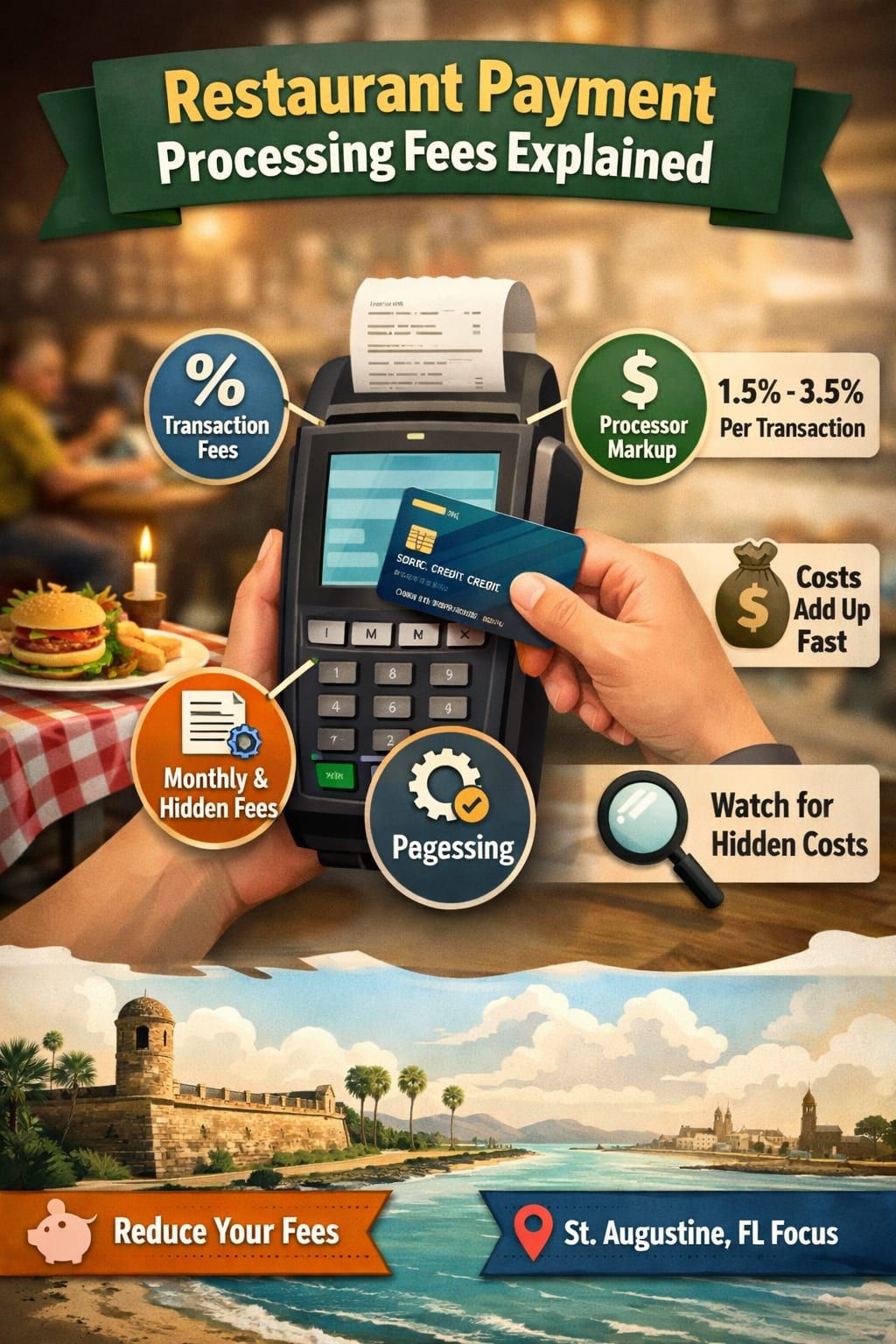
1.5% to 3.5% per transaction
At first glance, that might not seem like much. But for a restaurant processing $50,000–$100,000 per month, those fees can easily add up to thousands of dollars annually.
According to NerdWallet, even small differences in processing rates can significantly impact your long-term costs.
Over time, restaurant payment processing fees become one of the largest ongoing operational expenses—often without restaurant owners even realizing it.
What Makes Up These Fees?
There are three main components behind restaurant payment processing fees, and understanding them is the first step toward controlling your costs.
1. Interchange Fees
These are set by card networks like Visa and Mastercard. They are non-negotiable and vary depending on factors such as card type, transaction method, and risk level.
2. Processor Markup
This is what your payment processor adds on top of interchange fees. Unlike interchange, this portion is negotiable—and often where savings can be found.
3. Additional Fees
This is where things get less transparent. Many providers include extra charges such as:
- Monthly account fees
- PCI compliance fees
- Batch fees
- Gateway fees
These hidden costs are often where restaurant payment processing fees increase without you realizing it. Many restaurant owners focus only on the percentage rate, but these additional fees can quietly add up over time.
Why Most Restaurants Overpay
Many restaurants overpay simply because they don’t fully understand how their pricing works.
Common reasons include:
- Lack of transparency in pricing
- Complex, hard-to-read statements
- Flat-rate overcharging
- Hidden or unexpected fees
In many cases, providers design pricing structures that are difficult to decode. This makes it harder for restaurant owners to compare options or identify where they’re losing money.
The result is that restaurant payment processing fees remain higher than necessary—often for years.
From a Tap Simple perspective, this is exactly what should be eliminated. Restaurant owners should have full clarity and control, not confusion.
Pricing Models Explained
There are two main pricing structures that determine your restaurant payment processing fees:
Flat Rate Pricing
- Simple and predictable
- Same rate for every transaction
- Easier to understand
However, this simplicity often comes at a cost. Flat-rate pricing tends to be higher over time, especially for restaurants with higher volume.
Interchange Pricing
- Lower base cost
- More transparent
- Better for scaling businesses
While it can seem more complex at first, interchange pricing usually results in lower restaurant payment processing fees over the long run.
See how to choose the best payment processor for restaurants.
Can You Eliminate Payment Processing Fees?
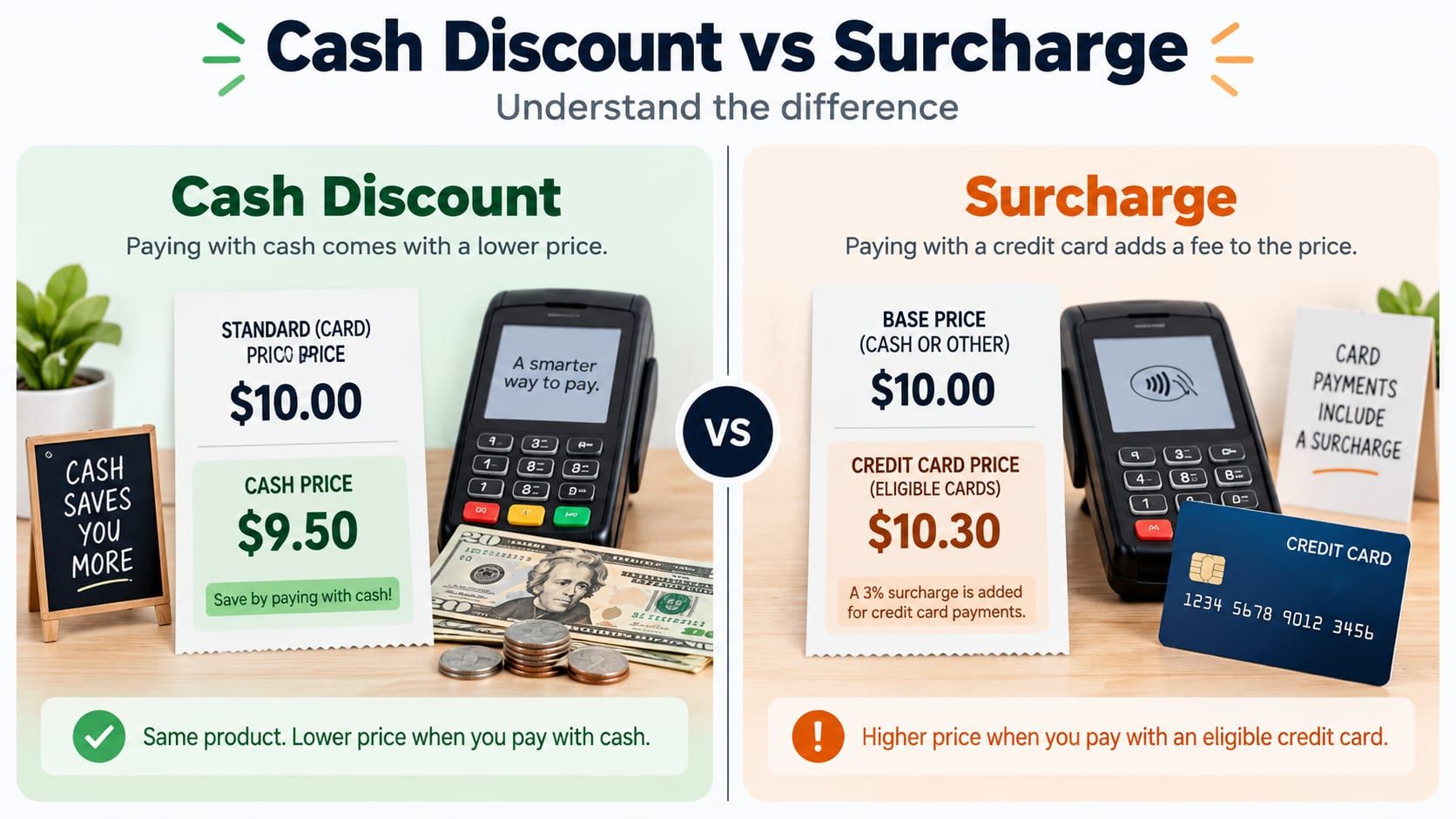
Yes—in many cases, you can significantly reduce or even eliminate restaurant payment processing fees.
Modern solutions now offer:
- Cash discount programs
- Dual pricing models
Learn how free credit card processing for restaurantsworks.
Instead of absorbing fees, restaurants adjust pricing depending on how customers pay. This allows businesses to offset costs rather than taking them on directly.
This approach represents one of the biggest shifts in how restaurant payment processing fees are managed today. Instead of treating fees as a fixed expense, they become something that can be optimized and controlled.
Ready to take cards?
How to Reduce Restaurant Payment Processing Fees
If you want to lower your restaurant payment processing fees, focus on these key areas:
1. Choose the Right Pricing Model
The structure you choose has a major impact on long-term costs.
2. Negotiate Your Rates
Many restaurant owners don’t realize that processor markup is negotiable.
3. Eliminate Hidden Fees
Carefully review your statements and identify unnecessary charges.
4. Use Alternative Pricing Models
Cash discounting and dual pricing can significantly reduce costs.
Even small adjustments can lead to meaningful savings over time.
A Note for Restaurants in St. Augustine, Florida
If you’re operating a restaurant in St. Augustine, Florida, restaurant payment processing fees can have an even greater impact on your business.
St. Augustine is a market driven by tourism, seasonality, and high transaction volume, especially during weekends and peak travel seasons. This means your payment system needs to handle increased demand without slowing down or increasing operational friction.
Because of this, St. Augustine restaurant payment processing requires a system that is both efficient and adaptable. A slow checkout experience during a busy night can directly impact table turnover and revenue.
Another key factor is the variety of payment methods used by visitors. Many customers rely on contactless payments, mobile wallets, or international cards. Your system must support all of these seamlessly to maintain a smooth experience.
Seasonality also plays a major role. During slower months, high fixed fees can become more noticeable. This is where optimizing restaurant payment processing fees becomes critical. Transparent pricing and flexible models help restaurant owners maintain profitability year-round.
Ultimately, for restaurants in St. Augustine, controlling restaurant payment processing fees is not just about saving money—it’s about creating a system that supports both busy seasons and slower periods without adding complexity.
Hidden Fees to Watch Out For
Not all fees are obvious.
Watch for:
- Statement fees
- Gateway fees
- Early termination fees
- Equipment leasing fees
These charges can quietly increase your restaurant payment processing fees over time, often without clear visibility.
How to Choose the Right Provider
Choosing the right provider is one of the most important decisions you can make when managing restaurant payment processing fees.
Look for:
- Transparent pricing
- No hidden fees
- Flexible pricing models
- Clear reporting
The right provider doesn’t just process payments—it helps you understand and control your costs.
Take Control of Restaurant Payment Processing Fees in St. Augustine
Understanding restaurant payment processing fees is one of the fastest ways to improve your restaurant’s profitability—especially in a competitive market like St. Augustine, Florida.
If you’re evaluating providers, choosing the best payment processor for restaurants is the next step in reducing your overall costs.
What often feels like a fixed expense is actually something you can actively optimize. Many restaurant owners assume fees are just “part of doing business,” but the reality is that small improvements in your setup can lead to meaningful savings over time. When you multiply even a small percentage difference across thousands of transactions, the impact becomes significant.
With the right structure, the right provider, and the right level of visibility, you can reduce restaurant payment processing fees and take full control of your payment strategy. This includes choosing transparent pricing models, eliminating hidden fees, and exploring alternatives like cash discounting or dual pricing.
For restaurants in St. Augustine, this becomes even more important. Seasonal traffic, high transaction volume, and diverse payment methods mean your system needs to perform consistently while keeping costs under control. A well-optimized setup helps you stay profitable during both peak seasons and slower periods.
In the end, restaurant payment processing should be simple, transparent, and aligned with your business goals—not something that quietly eats into your margins. When you have clarity and control, your payment system becomes a tool for growth, not just an expense.
Frequently Asked Questions About Restaurant Payment Processing Fees
1. What are restaurant payment processing fees?
Restaurant payment processing fees are the charges businesses pay when customers use credit cards, debit cards, or digital payment methods. These fees usually include a percentage of the transaction plus a fixed per-transaction cost.
For a complete overview, see our guide on restaurant payment processing.
2. How much are restaurant payment processing fees on average?
On average, restaurant payment processing fees range from 1.5% to 3.5% per transaction, depending on the provider, card type, and pricing model used.
If you’re comparing providers, learn how to choose the best payment processor for restaurants.
3. Why are restaurant payment processing fees so high?
Restaurant payment processing fees can seem high because they include multiple components, such as interchange fees (paid to banks), network fees (paid to card brands), and processor markups. Understanding your pricing structure is key to identifying where costs can be reduced.
4. Can restaurants reduce payment processing fees?
Yes, restaurants can reduce payment processing fees by choosing the right provider, negotiating rates, optimizing their pricing structure, or using strategies like cash discounting or dual pricing.
You can also explore free credit card processing for restaurants to offset or eliminate these costs.
5. Are restaurant payment processing fees tax deductible?
In most cases, restaurant payment processing fees are considered a business expense and can be deducted for tax purposes. However, it’s best to consult with an accountant to ensure compliance with local regulations.