Small businesses know the math: every card payment carries a processing cost, and in traditional processing the owner absorbs it out of each sale. Cash discount dual pricing changes who covers that cost. Tap Simple offers a cash discount program: you set a cash price, the card price covers the cost of processing, and each customer chooses how to pay. This guide explains how dual pricing works at the counter, who it fits and how to get started.
What cash discount dual pricing means
In traditional processing, the business pays the processing cost on every card sale, and that cost grows with your card sales. With cash discount dual pricing, the price you set is the cash price. Customers who pay by card pay the card price, which covers the cost of processing. Customers who pay cash get the lower cash price.
It does not make every cost disappear. Devices, software and account fees still apply, and they are listed on the Tap Simple pricing page. What changes is who covers the cost of each card payment.
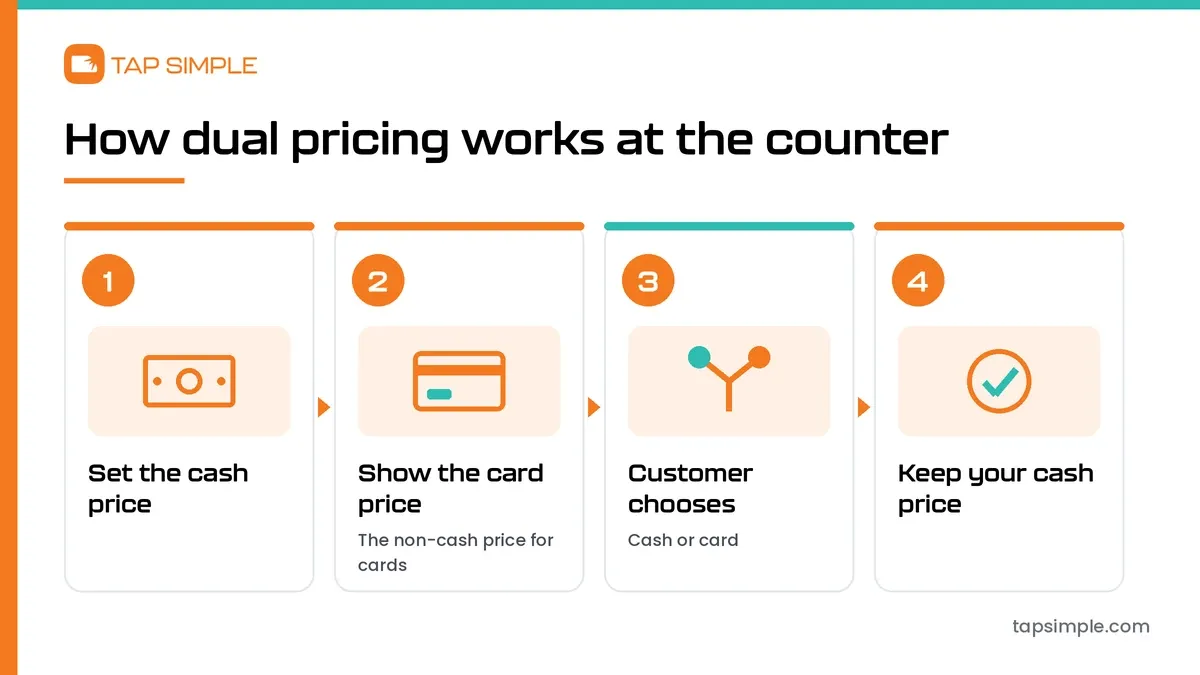
How cash discount dual pricing works at the counter
- Set the cash price. This is the amount you intend to earn when a customer pays cash.
- Show the card price. The card price is shown next to the cash price, so customers see both before they pay.
- Let the customer choose. Cash customers get the cash discount. Card customers pay the card price for the convenience of tap, chip or swipe.
- Keep the cash price you set. The card price covers the cost of processing, so it does not come out of your cash price.
Cash discounting is not a surcharge. Card network rules, disclosures and state rules differ between the two, and they can change, so confirm the current rules for your state. Our guide to cash discount vs surcharge explains the difference.
Clear signs and a one-sentence explanation for staff keep the conversation easy: “Here is the cash price, and this is the card price.” Different prices for different ways to pay are easier for customers to accept when they are explained up front.
Ready to see what dual pricing looks like for your business? Start your application or see pricing.
Why small businesses choose cash discount dual pricing
Margin protection. The cash price you set stays intact when a customer pays by card.
A simple customer conversation. A cash price and a card price are easy to explain, and customers choose how to pay.
The same card convenience. Customers still tap, insert or swipe their cards and mobile wallets. Only the price shown for each way to pay changes.
For worked examples with numbers, see our guide to the benefits of a cash discount program.
Who cash discount dual pricing fits
Trades and field service. Plumbers, electricians and HVAC technicians collect payment on site, so the price they quoted stays intact when a customer pays by card in the driveway.
Retail and service counters. Boutiques, convenience shops and service desks with steady card sales can protect their margins without raising cash prices. See credit card processing for retail.
Mobile and pop-up sellers. Food trucks, markets and pop-ups need to take payments anywhere and can show the same cash and card prices at every stall.
Restaurants and cafés. Busy tables and counters take card payments all day. Our guide to cash discount pricing for restaurants covers the details.
Ready to take cards?
Devices that work with the program
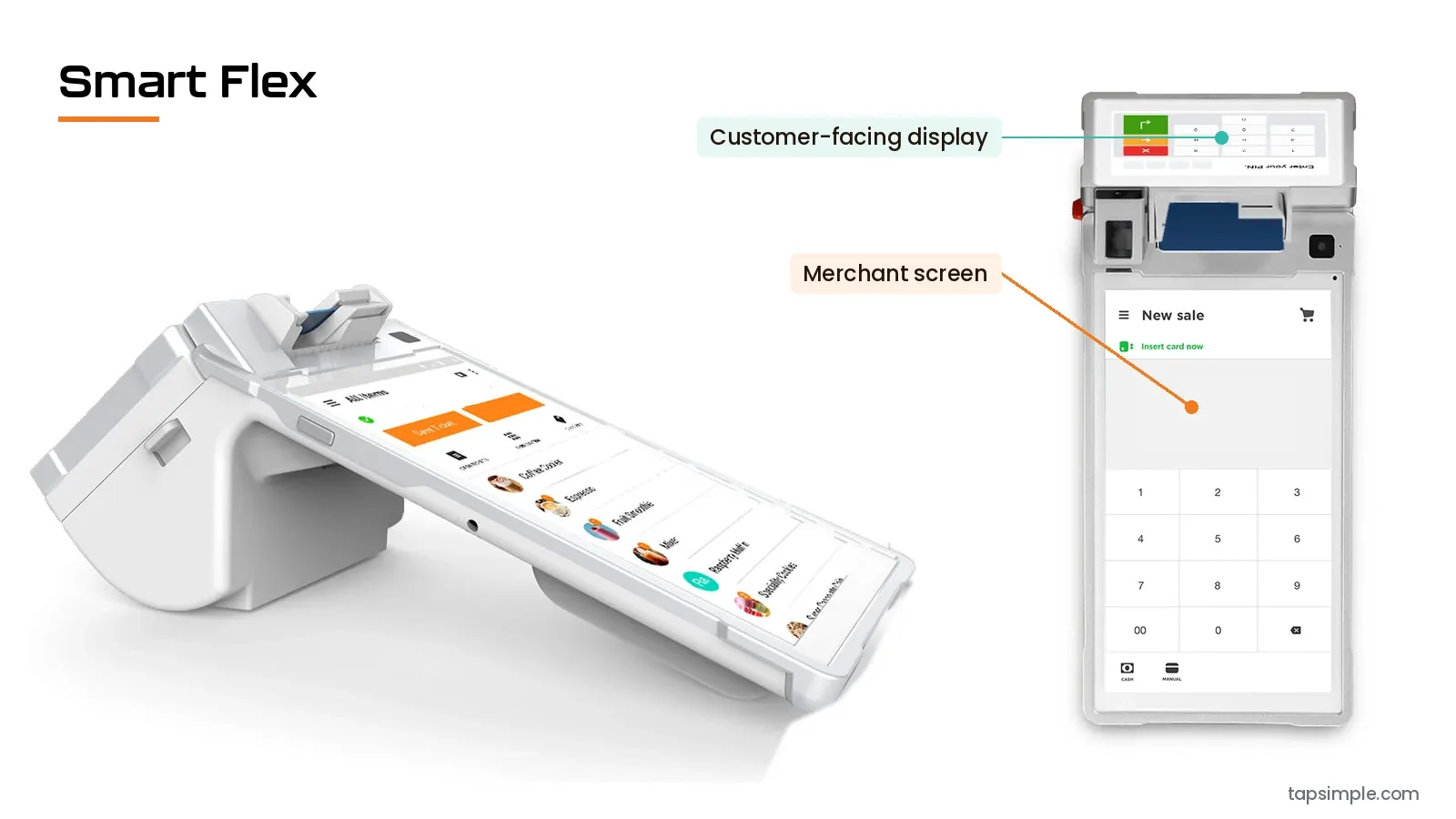
Tap Simple pairs the cash discount program with a device for each way of selling: the 3-in-1 Reader for your phone or tablet, the Smart Terminal handheld with a built-in printer, and the Smart Flex with a customer-facing display for the counter. Every device reports to one Payments Hub for sales, batches, deposits and reports.
Getting started with Tap Simple
- Apply online. Start your application at app.tapsimple.com.
- Choose your device. Pick the device that fits how you sell most days.
- Prepare your signs. Post the cash and card prices clearly where customers pay.
- Brief your team. Practice the one-sentence explanation of the cash price and the card price.
Tap Simple makes cash discount dual pricing straightforward, with support you can reach directly. Start your application or see pricing.
Cash discount dual pricing FAQs
Frequently asked questions
Does cash discount dual pricing mean card processing costs nothing?
No. The card price covers the cost of processing each card payment, so that cost does not come out of your cash price. Devices, software and account fees still apply, and they are listed on the Tap Simple pricing page.
Is dual pricing the same as a surcharge?
No. Dual pricing shows a cash price and a card price, while a surcharge adds a fee to card payments. Card network rules, disclosures and state rules differ between them, and the Tap Simple program is built on cash discounting.
What do customers see with dual pricing?
Customers see the cash price and the card price before they pay, then choose how to pay. Clear signs and a short explanation from staff help the conversation go smoothly.
Which businesses use cash discount dual pricing?
Tradespeople, retailers, food trucks, restaurants and cafés often use it, especially when they take many card payments and want to protect their margins.