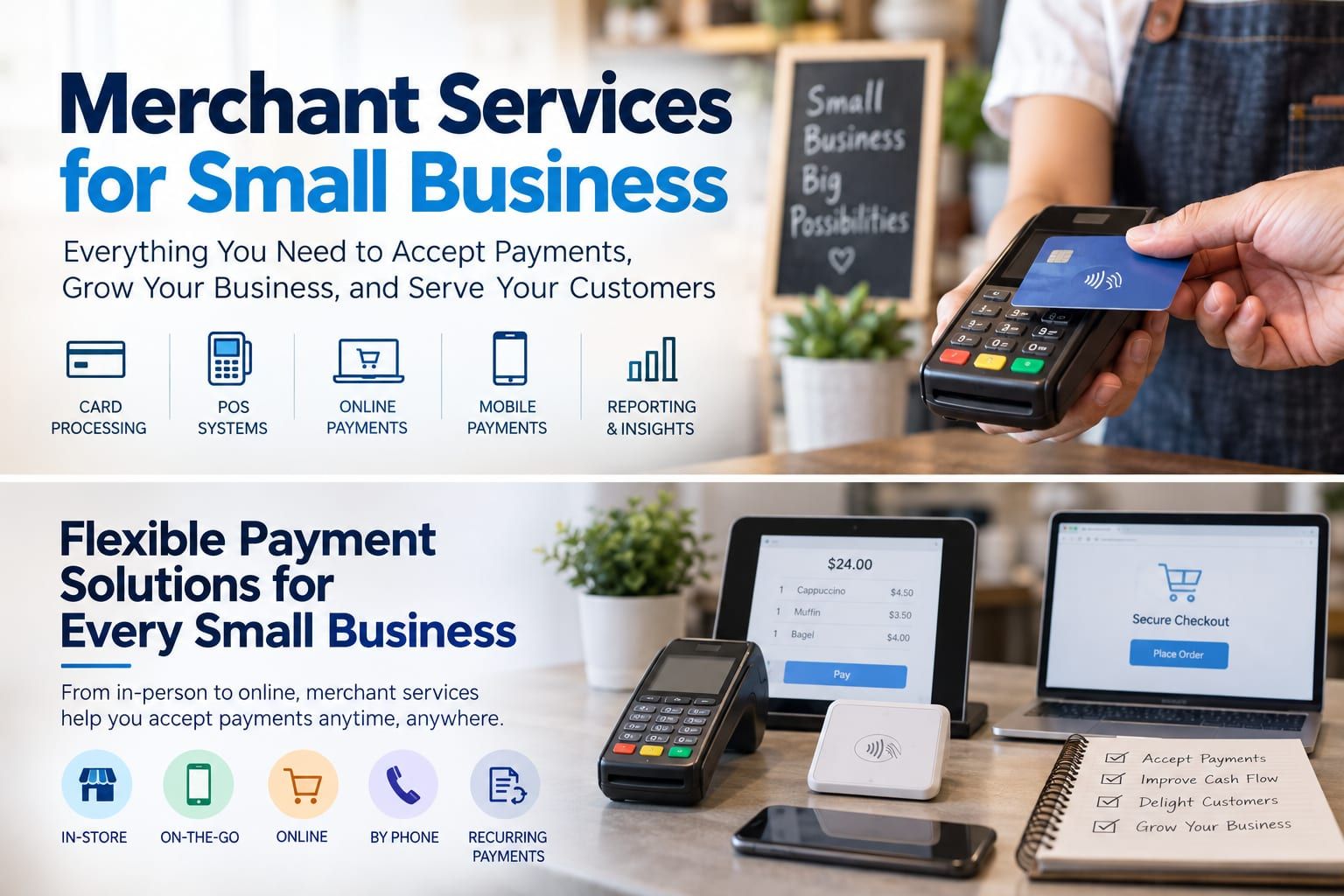
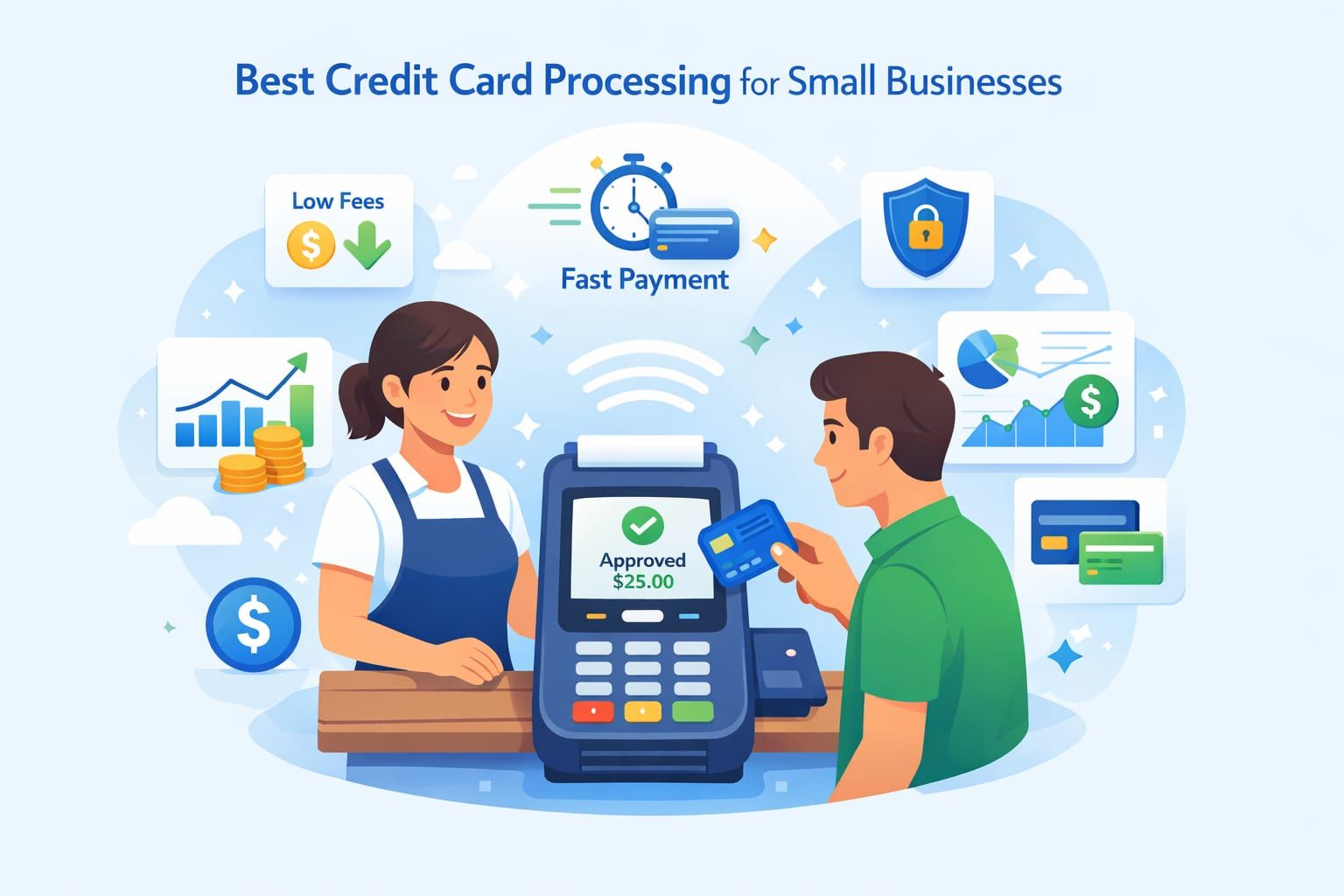
For most modern companies, accepting card payments is no longer optional. Customers expect the convenience of paying with credit cards, debit cards, tap-to-pay, or mobile wallets like Apple Pay and Google Pay. For business owners, however, choosing the best credit card processing for small businesses can feel overwhelming.
Payment providers often advertise similar features, but the differences in fees, contracts, and technology can significantly affect a company’s bottom line. Processing costs alone can consume thousands of dollars each year for small businesses.
Whether you operate a retail shop, restaurant, service business, or online store, selecting the best credit card processing for small businesses requires understanding how payment systems work and how providers structure their pricing.
This guide explains the fundamentals of payment processing, the costs involved, and the features that matter most. It will also explore modern payment technologies that help small businesses accept payments more efficiently while keeping more of their revenue.
What Credit Card Processing Actually Does
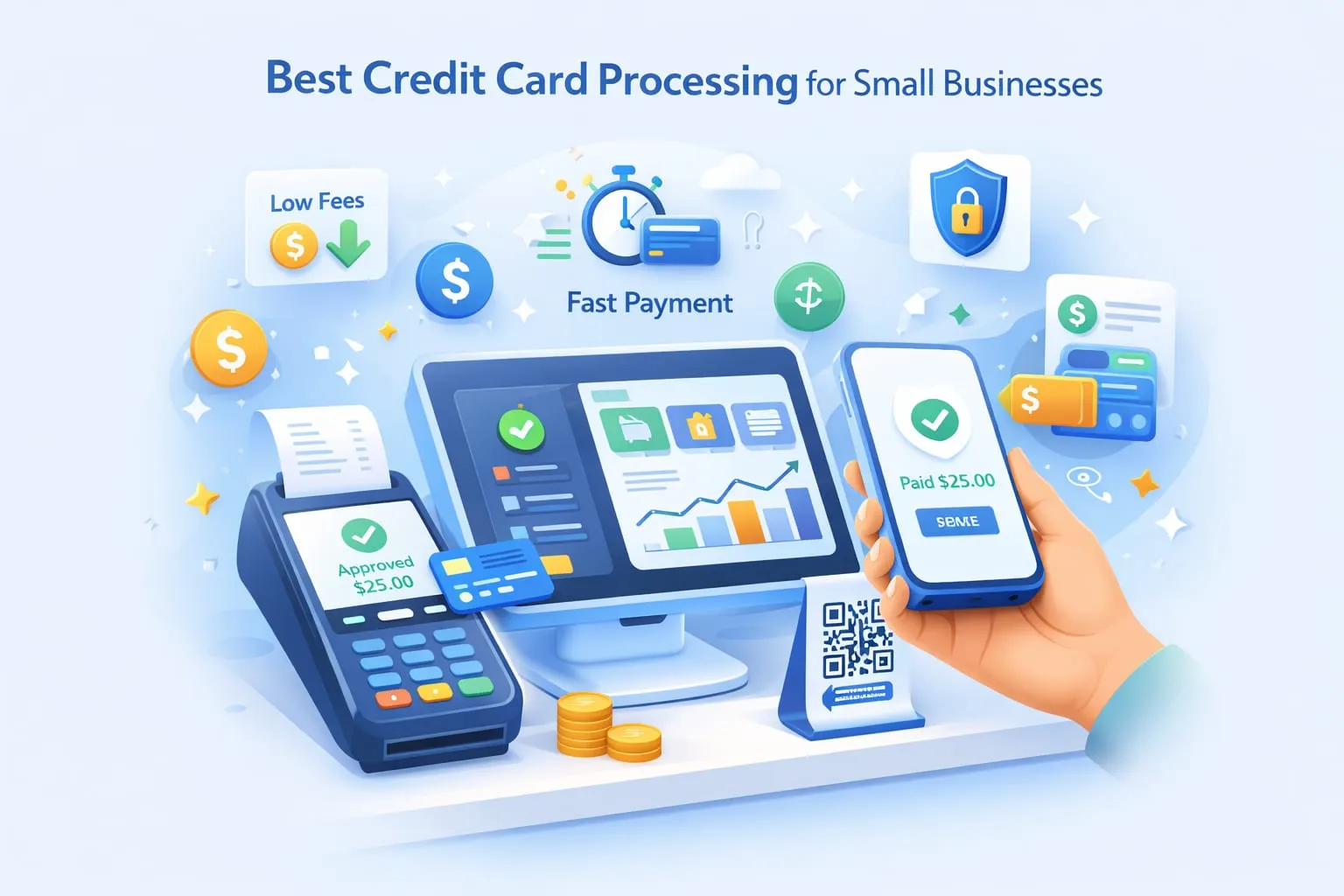
When a customer pays with a credit card, the transaction passes through several systems before funds reach the merchant’s bank account. Although the process happens in seconds, multiple organizations work together to complete it.
The typical payment flow includes:
- The customer taps, swipes, or inserts their card.
- The payment terminal sends the transaction to a payment processor.
- The processor communicates with the credit card network (Visa, Mastercard, etc.).
- The issuing bank verifies the cardholder’s account and approves or declines the transaction.
- The funds are transferred to the merchant’s account during settlement.
Each step involves infrastructure, technology, and risk management. Because several companies participate in the process, fees are applied at different levels.
This complexity is one reason many merchants spend time researching the best credit card processing for small businesses before committing to a provider.
Why Credit Card Processing Fees Exist
Payment processing fees can be confusing for many business owners. In most cases, the total fee paid per transaction consists of several components.
Common fees include:
Interchange fees
These are set by the credit card networks and paid to the issuing bank.
Processor markup
The payment processor adds its own percentage or fixed fee for providing services.
Monthly service fees
Some providers charge account maintenance or reporting fees.
Equipment costs
Payment terminals or POS devices may involve purchase or leasing costs.
Depending on the provider, total processing costs typically range between 2% and 4% per transaction.
For businesses with high sales volumes, this expense can significantly affect profitability. This is why entrepreneurs frequently compare multiple providers when searching for the best credit card processing for small businesses.
According to the National Retail Federation, card swipe fees cost U.S. merchants billions of dollars each year.
Understanding how these fees work is the first step toward choosing a payment system that supports long-term growth.
Pricing Models Used by Payment Processors
Different processors structure their pricing models in different ways. Understanding these models helps merchants evaluate which provider offers the best value.
Flat-Rate Pricing
Flat-rate pricing charges the same percentage for every transaction. This structure is simple and predictable, making it popular among new businesses.
However, flat-rate pricing can sometimes be more expensive for businesses with high transaction volumes.
When researching the best credit card processing for small businesses, many owners start by comparing flat-rate options because they are easier to understand.
Interchange-Plus Pricing
Interchange-plus pricing separates the interchange fee from the processor’s markup. Businesses pay the interchange rate plus a small additional fee.
This model is more transparent and can often reduce costs for businesses processing larger volumes.
Tiered Pricing
Tiered pricing categorizes transactions into qualified, mid-qualified, and non-qualified tiers. Each category has a different fee.
While this structure can appear attractive at first, it often lacks transparency and may result in higher costs.
For this reason, many merchants searching for the best credit card processing for small businesses prefer pricing models that are simple and predictable.
Essential Features of Modern Payment Systems
Payment technology has evolved significantly over the past decade. Today’s payment systems provide much more than simple card processing.
The best credit card processing for small businesses usually includes several key features that help merchants operate more efficiently.
Smart Payment Devices
Modern payment terminals often include touchscreens, wireless connectivity, and built-in business management tools.
These devices allow businesses to accept:
- credit cards
- debit cards
- contactless payments
- mobile wallets
- chip transactions
Reliable hardware is essential when choosing the best credit card processing for small businesses, especially in fast-paced environments like restaurants or retail stores.
Real-Time Sales Reporting
Advanced payment systems provide detailed analytics that help business owners track sales patterns, peak hours, and customer behavior.
Access to real-time reporting helps merchants make informed decisions about inventory, staffing, and promotions.
Mobile Payment Capabilities
Many businesses now operate outside traditional storefronts. Mobile payment systems allow merchants to accept cards using smartphones or portable readers.
This flexibility has become a defining characteristic of the best credit card processing for small businesses, particularly for service providers and mobile businesses.
Types of Payment Systems Available Today
Business owners can choose from several types of payment systems depending on how they interact with customers.
Countertop POS Systems
Traditional countertop POS systems are common in retail stores and restaurants. These systems integrate payment processing with inventory management and employee tracking.
For brick-and-mortar businesses, countertop POS systems are often part of the best credit card processing for small businesses because they combine multiple operational tools in one platform.
Mobile Card Readers
Mobile readers connect to smartphones or tablets, allowing merchants to process payments anywhere.
This option is ideal for:
- contractors
- delivery businesses
- food trucks
- pop-up stores
- event vendors
Smart Terminals
Smart terminals combine payment processing with business management tools, offering features such as:
- digital receipts
- inventory tracking
- tipping options
- integrated reporting
These devices are increasingly common among providers offering the best credit card processing for small businesses.
Ready to take cards?
The Rise of Fee-Free Processing Models
One of the biggest innovations in the payments industry is the emergence of free payment processing models.
In these programs, merchants avoid paying most processing fees by implementing a transparent pricing structure for card transactions.
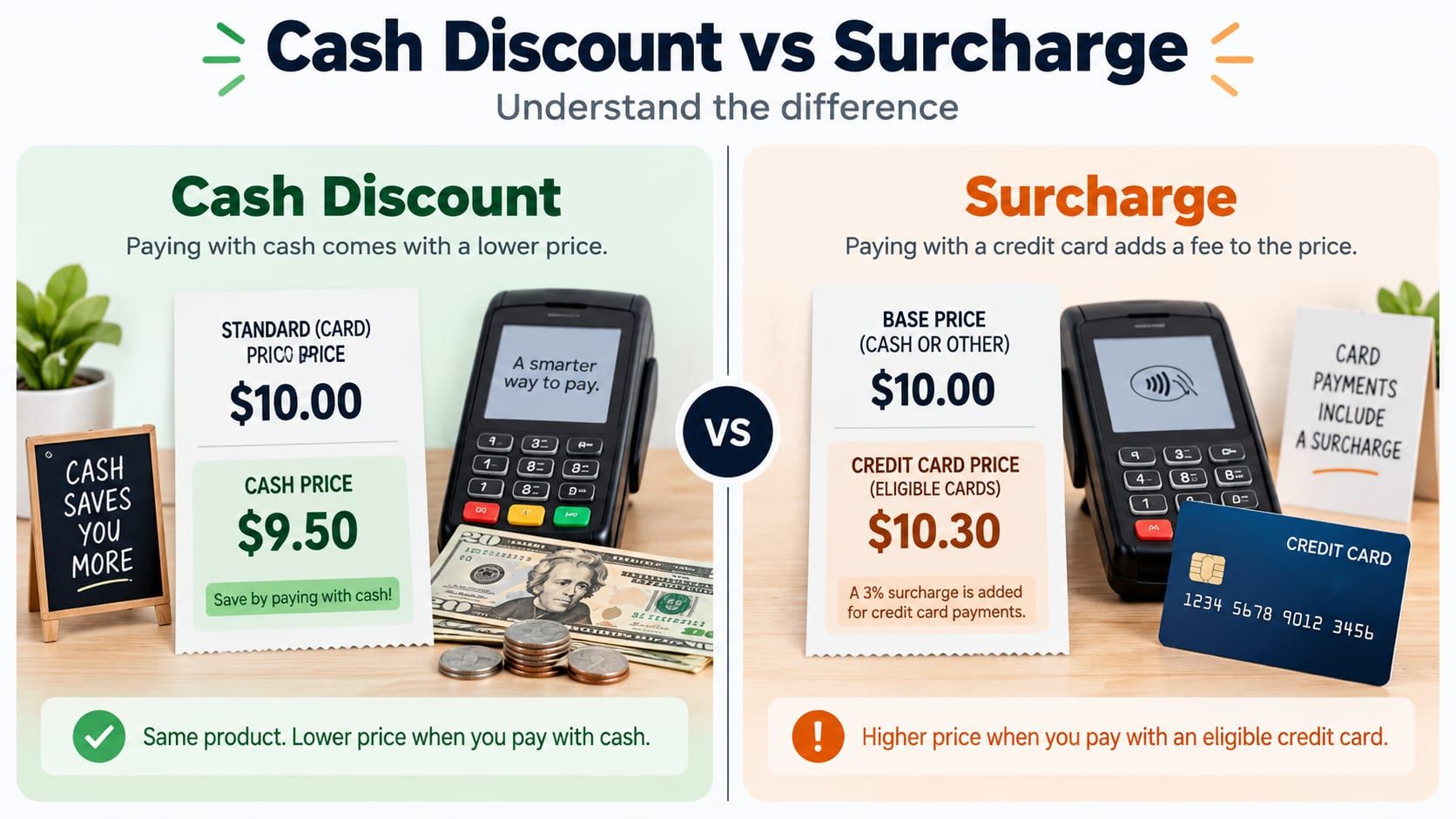
Instead of the business paying the processing fee, the system adds a small service adjustment for card payments while cash payments remain unchanged.
For many companies, this approach dramatically reduces operating costs and improves margins.
Many providers now offer free credit card processing for small business, allowing merchants to eliminate traditional processing costs.
Because of these advantages, fee-free systems are becoming a major factor when evaluating the best credit card processing for small businesses.
Accepting Payments Online and In Person
Modern businesses often need to accept payments through multiple channels.
The best credit card processing for small businesses supports:
- in-store transactions
- online checkout pages
- mobile payments
- invoices and payment links
- subscription billing
Providing multiple payment options improves convenience for customers and helps businesses capture more sales opportunities.
Businesses exploring credit card payments for small business should consider systems that support both online and in-person transactions.
Security and Fraud Protection
Payment security is essential for protecting customer data and maintaining trust.
The best credit card processing for small businesses includes advanced security features such as:
- end-to-end encryption
- tokenization
- fraud monitoring
- PCI compliance
These systems protect sensitive financial information while helping merchants avoid costly chargebacks and disputes.
How to Switch Payment Providers Safely
Many business owners hesitate to switch payment processors because they fear operational disruptions. Fortunately, modern payment systems make the transition much easier.
When moving to a new provider, businesses should:
- Review current contract terms and cancellation policies.
- Compare hardware compatibility with the new system.
- Schedule the transition during a low-traffic period.
- Train employees on the new payment device.
- Test transactions before going fully live.
Following these steps ensures a smooth transition when upgrading to the best credit card processing for small businesses.
Why Payment Technology Matters for Business Growth
Payment systems are no longer just transactional tools. They are now part of a broader digital ecosystem that supports business growth.
The best credit card processing for small businesses often includes integrated tools for:
- customer insights
- marketing campaigns
- loyalty programs
- inventory management
- sales analytics
These capabilities allow merchants to operate more efficiently while delivering a better customer experience.
How Small Businesses Can Reduce Credit Card Processing Fees
One of the most common reasons business owners research the best credit card processing for small businesses is to reduce the high cost of payment processing. Credit card fees can quietly consume a large percentage of revenue over time, especially for companies that process hundreds or thousands of transactions each month.
Understanding how these costs work is the first step toward controlling them.
Many businesses pay between two and four percent per transaction depending on their payment provider, card type, and pricing structure. When these fees are multiplied across thousands of sales each year, the total cost can become one of the largest operational expenses for a small company.
Because of this, many merchants actively compare providers to find the best credit card processing for small businesses that offers lower fees, more transparent pricing, and flexible payment technology.
Choose Transparent Pricing
One of the most effective ways for business owners to reduce payment processing costs is by choosing a provider that offers clear and transparent pricing. Many traditional processors advertise low rates but include hidden fees such as PCI compliance charges, monthly account fees, statement fees, or early termination penalties that can significantly increase the true cost of accepting credit card payments.
The best credit card processing for small businesses should make pricing simple and easy to understand so merchants know exactly what they are paying for every transaction. Transparent pricing eliminates surprises and allows business owners to accurately calculate their operating costs.
This is one reason many companies are turning to Tap Simple when searching for the best credit card processing for small businesses. Tap Simple focuses on straightforward payment solutions designed specifically for small businesses that want modern payment technology without complicated pricing structures.
Instead of confusing contracts and hidden charges, Tap Simple provides clear pricing, reliable payment hardware, and tools that allow merchants to accept payments quickly both in-store and on the go. This approach helps small businesses maintain predictable costs while improving the overall checkout experience for their customers.
By choosing a provider that prioritizes transparency and simplicity, business owners can better control their expenses and ensure they are using the best credit card processing for small businesses available for their needs.
Businesses looking for a modern solution can exploreTap Simple’s payment platform designed specifically for small businesses.
Use Modern Smart Payment Devices
New payment technology can also help reduce operational costs. Modern payment devices often combine multiple functions into one system, including sales reporting, digital receipts, and inventory management.
The best credit card processing for small businesses usually includes smart payment terminals that improve efficiency while providing a better checkout experience for customers.
Faster checkout speeds, improved reporting, and better customer insights can all contribute to increased sales and smoother daily operations.
Consider Alternative Processing Models
In recent years, alternative payment models have gained popularity among small businesses that want to reduce traditional processing costs.
Some providers now offer systems that allow businesses to avoid many transaction fees through transparent pricing structures that adjust how card payments are handled.
These systems have become increasingly attractive for merchants searching for the best credit card processing for small businessesbecause they can significantly lower operating costs without sacrificing convenience for customers.
Compare Providers Regularly
Payment technology evolves quickly, and pricing structures change frequently across the industry. Businesses should periodically review their payment processing provider to ensure they are still receiving competitive pricing.
Comparing options every few years can help businesses confirm they are using the best credit card processing for small businesses available at the time.
Switching providers may seem complicated, but modern payment systems often make the transition easier than many merchants expect.
By taking the time to evaluate pricing models, hardware capabilities, and support services, businesses can select the best credit card processing for small businesses that aligns with their financial goals and long-term growth.
Selecting the best credit card processing for small businesses requires evaluating more than just transaction fees. Reliability, hardware quality, security, and customer support all play a role in determining which provider is right for your company.
Modern payment technology offers powerful tools that allow businesses to accept payments quickly, manage operations more efficiently, and reduce unnecessary costs.
By understanding how payment processing works and comparing available options carefully, small business owners can choose a system that supports both daily operations and long-term growth.
Frequent Asked Questions
What is the best credit card processing for small businesses?
The best credit card processing for small businesses combines transparent pricing, reliable payment hardware, fast deposits, and secure transactions.
How much do small businesses pay in credit card processing fees?
Most businesses pay between 2% and 4% per transaction depending on their provider and pricing structure.
Can businesses reduce credit card processing costs?
Yes. Some payment providers offer alternative pricing models that allow merchants to significantly reduce or eliminate processing fees.
What equipment is needed to accept credit card payments?
Businesses typically need a POS system, payment terminal, or mobile card reader capable of processing chip cards and contactless payments.
Are mobile payments secure for small businesses?
Yes. Modern payment systems use encryption and PCI compliance standards to protect customer information and ensure secure transactions.